


Edward Jenner
Some exam boards group Edward Jenner into the Renaissance and others into the Industrial period. We’ve chosen to keep him in the Renaissance!
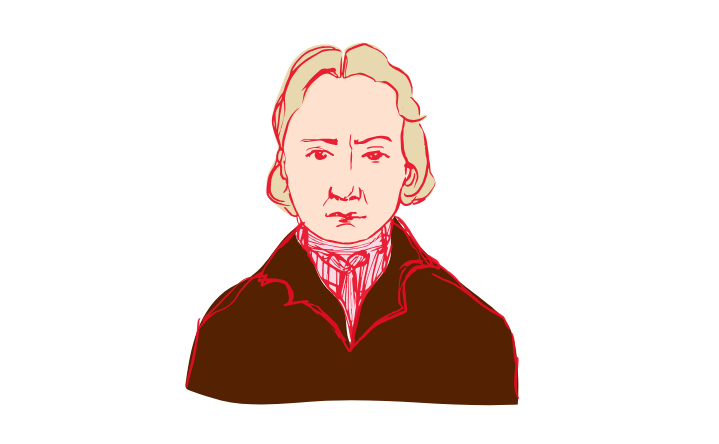
Born in 1749, Edward Jenner was an English country doctor who changed the course of medical history through vaccination. Jenner studied at the University of London where he was taught by John Hunter, an influential surgeon and anatomist. Jenner is often referred to as the ‘the Father of Immunology’.
Smallpox
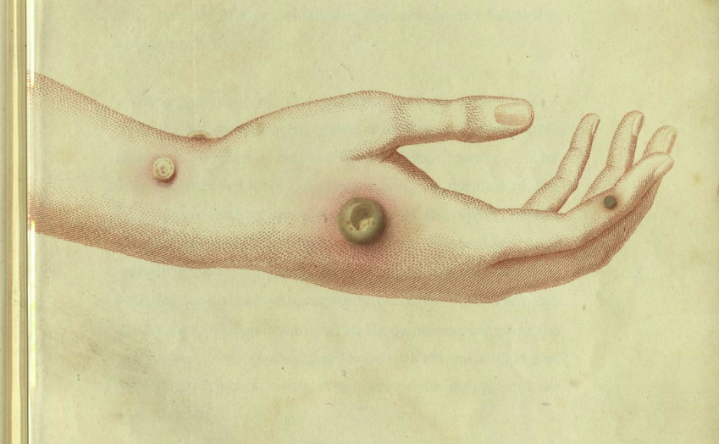
Smallpox was a deadly disease that devastated 18th-century Britain. It’s caused by the variola virus, and came with severe symptoms that could stay with a person forever. These included:
- A blistery rash that could leave behind scars
- Pain in the joints
- Blindness
Worse than these symptoms, there was a one in five chance you would die if you caught smallpox. In 1694, Queen Mary even died from the disease. You can read more about the symptoms of smallpox in detail in A Dissertation on the Method of Inoculating the Small-Pox.
“small Pimples appear here and there, especially in the Face, Neck and Breast, and gradually over the whole Body, which daily increase in Height and Bigness. […] By these the Skin and Flesh adjacent are inflam’d with great pain and tumefied. The Eye-lids become so swollen that they close, and thereby the Patient is deprived of Sight”.
Jenner’s Discovery
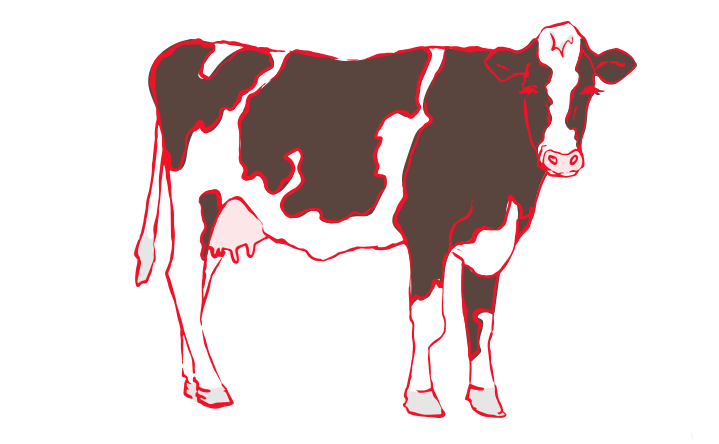
Word had spread to Edward Jenner that milkmaids who had caught cowpox – a disease that can’t cause harm to humans – were immune to catching smallpox. Jenner decided to transform this theory into action through scientific experimentation, by taking pus from a cowpox scab on the arm of Sarah Nelmes (a milkmaid) and putting it into a cut on the arm of James Phipps (an 8-year-old boy). Later, Jenner gave Phipps smallpox. Phipps never became infected or ill with the disease, proving that people who are first infected with cowpox are immune.
However, the Royal Society insisted Jenner needed more concrete evidence. So, Jenner repeated his experiment over 20 times to confirm it was true – even on his own infant son – and published his findings in his ground-breaking book, An Inquiry into the Causes and Effects of the Variolae Vaccinae, Or Cow-Pox in 1798. Jenner was awarded £10,000 for his work by the government in 1802 and an additional £20,000 in 1807, which he used to launch a vaccination clinic in London.
Did You Know?
The word vaccination comes from the Latin word for cow, “vacca”.
Impact
Impact
Smallpox was declared officially eradicated by the World Health Organisation in 1980. Since Jenner’s work, vaccination programmes have helped prevent the spread of disease and countless deaths all around the world. However, even though Jenner had discovered something extremely important, he couldn’t actually explain how or why his discovery worked. This meant new vaccinations weren’t developed until much later, over 100 years after he published his findings.
Challenges
It wasn’t until Louis Pasteur discovered Germ Theory that vaccination could be explained, so Jenner struggled to convince people that his vaccine was safe and worth having. Many people believed it was wrong to inject humans with cowpox. It was also still commonly believed that God sent disease as a punishment for people’s sins, so people thought it wasn’t right to intervene with cowpox.
Following the smallpox epidemic of the late 1830s, the smallpox vaccine was made free for every infant by 1840, and by 1853 it was made compulsory. Many people thought it wasn’t up to the government to make decisions about people’s health in this way, so in 1866 an anti-vaccine league was started in England. By 1871, the government introduced fines for parents who refused to have their children vaccinated. This was the case until the smallpox death rate decreased significantly by 1887, when the government decided to allow parents the option to refuse vaccination for their children.
Quiz yourself!
Want to share feedback on this content? Get in touch or fill out the form.

