


New Ideas
The Renaissance (or “rebirth”) is known for its impact on art and literature, remembered as a time when creativity was rediscovered. But it was also a significant time for science too. Religious ideas and ways of thinking began to be challenged, and out of this, new scientific ideas and ways of thinking were born. Alongside these ideas also came new inventions. All of this led to major change in Britain, and revolutionised medicine.

The Printing Press

Some people say the printing press was the most important invention in the history of medicine. The printing press was invented in 1450 by Johannes Gutenberg, who designed metal blocks that printed individual letters.
By the end of the fifteenth century, the printing press arrived in London and had a huge impact. Until the printing press, monks copied out individual texts onto parchment by hand. Now, texts could be printed much quicker and far cheaper, meanwhile more people in society were learning to read, so new ideas spread fast. This didn’t mean that old ideas completely vanished, but it meant they were at least challenged.
The Microscope
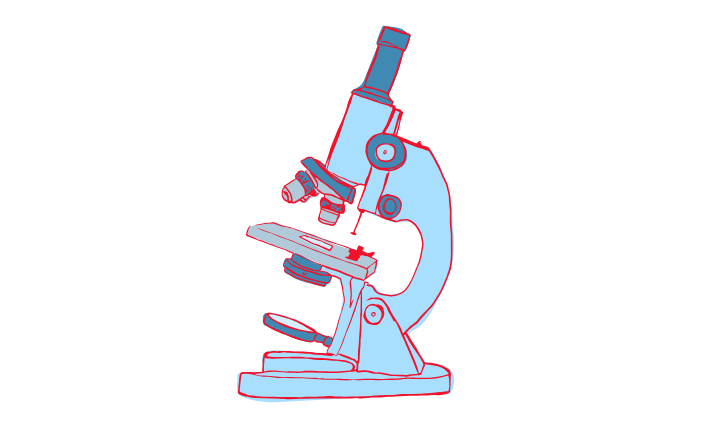
The invention of the microscope in 1677 meant that people could begin studying diseases more closely to understand what causes them and how they can be prevented and treated. In 1665 Robert Hooked published Micrographia, a book containing detailed microscopic images, the first ever book of this kind.
The Royal Society

The Royal Society was founded in 1660 by a group of men, originally named the ‘Society for Learning’. These men believed in the ideas of writer and philosopher, Francis Bacon. He said that real learning takes place through experiments, not by reading ancient texts, and that ‘knowledge is power’. Throughout the 1500s, people still continued to turn to the ancient work of Galen and Hippocrates, so these ideas were new to society.
Charles II supported the work of the Royal Society, and granted them what is known as a ‘Royal Charter’ in 1662. This document gave the society a right to publish. His support for the Royal Society and their scientific approach showed how attitudes to medicine were changing among those in power.
The Royal Charter helped the society by strengthening its reputation. By 1665, it had its own regular publication called ‘Philosophical Transactions’, which featured the results of experiments and detailed microscopic drawings. What was important about this publication is it was printed in English instead of Latin, so that more scientists were able to understand and discuss their research.
Quiz yourself!
Want to share feedback on this content? Get in touch or fill out the form.

