


Louis Pasteur
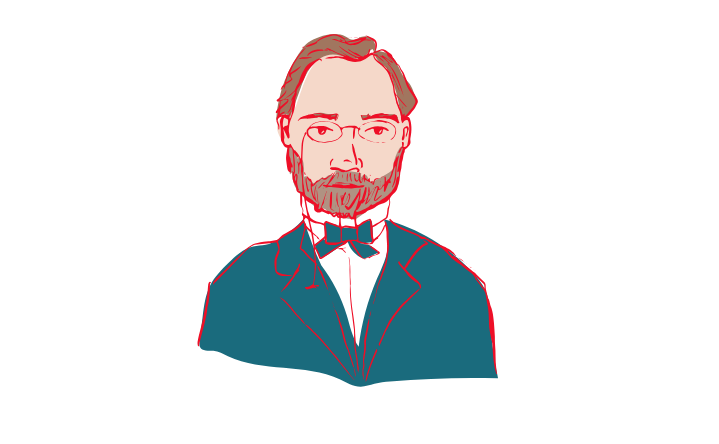
Born in 1822, Louis Pasteur was a French chemist who played a huge role in our understanding of germs. Known as ‘the Father of microbiology’, Pasteur is most famous for his Germ Theory and is also well-known for his work on vaccination.

Did You Know?
The term “pasteurisation” comes from Louis Pasteur’s surname. It’s the name given to the process of heating milk to prevent it from going off.
Robert Koch
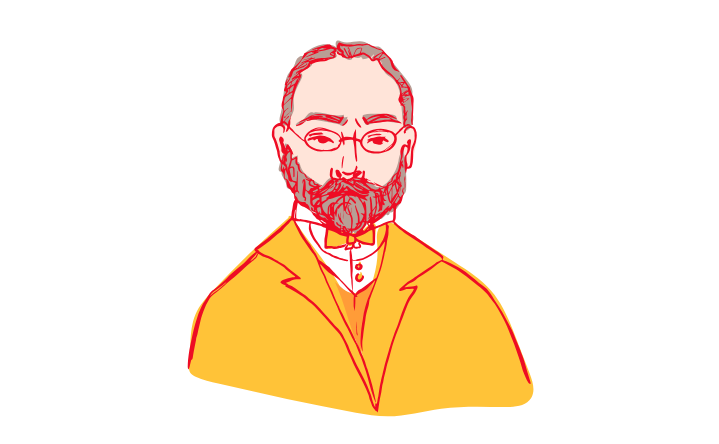
Born in 1843, Robert Koch was a German microbiologist who worked at the same time as Louis Pasteur. Although both Pasteur and Koch contributed to our understanding of germs and disease, at the time they thought of each other as rivals.
Ideas about Germs
As we moved into the 19th century, people still didn’t know much about germs. Most of society still blamed disease on miasma, and many doctors believed germs were completely harmless.
Now that microscopes were more advanced, scientists were able to see microbes (or germs) up close. Noticing microbes on rotten food and human waste, scientists came up with a theory known as ‘spontaneous generation’ which became popular at the time. Spontaneous generation was the idea that when something begins to rot, it creates microbes. We now know this is the wrong way around!
Germ Theory
Louis Pasteur was familiar with germs from his work on the production of beer and milk. His experiments helped him realise that germs were causing decay in beer and milk. His experiments with liquids, which demonstrated how a liquid would turn if germs from the air could get into it, disproved the idea of spontaneous generation, and proved that it was the other way around: germs cause decay and disease.
In 1861, Pasteur published his ground-breaking findings in Germ Theory. However, he still didn’t have any evidence of germs causing disease in humans as he wasn’t a doctor, so he had only really worked with animals, beer and milk. Of course this meant people weren’t too sure about his ideas.
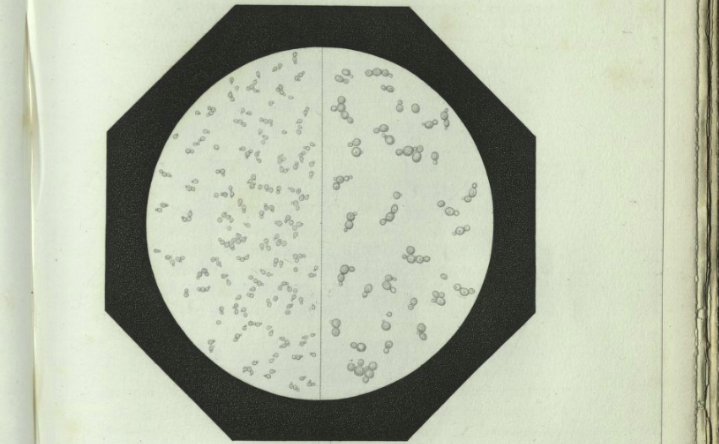
By 1868, Pasteur found further evidence to make his case for Germ Theory. He discovered that French silkworms were producing poor quality silk and, using a microscope, found that this was because the silkworms and silkworm eggs were infected with bacteria.
Although Pasteur was the first person to ever make the connection between disease and germs, it wasn’t until 1876 when Robert Koch began making connections between specific diseases and specific germs that Germ Theory started to be accepted. Some of Koch’s significant discoveries included:
- The germs that cause anthrax in 1876
- The germs that cause tuberculosis (TB) in 1882
- The germs that cause cholera in 1883-4
These discoveries led to further opportunities for Koch and his team to identify the cause of a range of diseases that were deadly in Britain, from typhoid to tetanus.
Chicken Cholera
Meanwhile in 1879, Pasteur and his assistant Charles Chamberland were trying to develop a cure for cholera in chickens. The pair planned to inject chickens with cholera cultures then try to cure them. However, after enjoying a holiday, Chamberland returned to inject a chicken with cholera cultures that had been left on his desk while he was away. This cholera had weakened over time, so the chicken didn’t develop any symptoms. Pasteur insisted Chamberland try again with fresh cholera cultures, and to his surprise, the chicken still didn’t become ill with cholera. It was by chance that Pasteur then realised that the germs from the cultures left behind during Chamberland’s holiday had made the chicken immune to cholera. This meant Pasteur could develop a vaccine because of Chamberland’s mistake. Unlike Edward Jenner, who made his discoveries at a time when society didn’t know the how or the why behind vaccination, Pasteur could then reproduce this method for vaccines for other diseases.
Supporters and Challengers
Because germs are microscopic, it took a while for people to get on board with the idea of Germ Theory. However, one of the major reasons people challenged Pasteur is because of Dr Henry Charlton Bastian. He was a respected British doctor who strongly believed in the theory of spontaneous generation and rejected Pasteur’s ideas.
Pasteur did, however, have some significant supporters. John Tyndall, a British scientist, was one example. Tyndall discovered that dust particles in the air are actually living, which meant that microbes in the air could cause disease and decay. Tyndall shared his knowledge and used this to support Pasteur’s Germ Theory.
Impact
The work of Louis Pasteur and Robert Koch had a huge impact on the medicine in Britain. Germ Theory inspired Joseph Lister’s work in making surgery safer, supported John Snow’s response to cholera, and led to the development of a range of specific treatments for specific diseases. All of this forced the government to act to improve public health. Despite its impact, Germ Theory didn’t make much difference when it came to British medical treatments. Further discoveries and the development of the pharmaceutical industry were needed before the general public could really benefit from all of Pasteur and Koch’s hard work!
Quiz yourself!
Want to share feedback on this content? Get in touch or fill out the form.

