


The Great Plague of 1665
Since the Black Death in the late 1340s, the plague kept returning to Britain. The 1665 Great Plague was one of the largest bubonic plague outbreaks in history, starting in London in the spring of that year. By the summer, it had spread all across London, eventually killing up to 100,000 people in the capital alone. It reached much further, from Newcastle to Southampton.
Symptoms
The Great Plague was a bubonic plague, so those who were unlucky enough to catch it would develop painful buboes (or swellings) in their armpits and groin and suffer from a fever and nausea. Like the Black Death, the Great Plague killed most victims within just days.
Beliefs about the Cause
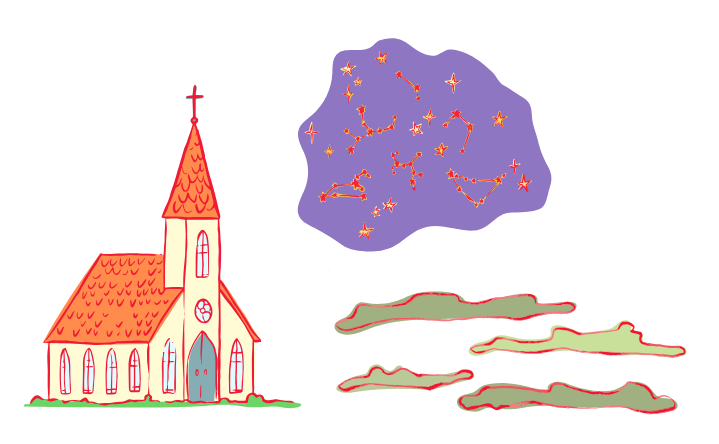
Society’s beliefs about the cause of the plague were still very similar to when the Black Death struck in 1348. Most people still believed:
- The plague was a punishment sent from God for people’s sins
- The plague was carried by bad smells in the air, known as miasma
- The plague was caused by changes in the stars and the planets
However, by this time, people had started to question if it was spread by human contact or through stray animals in the street, and noticed how the spread became worse in poorer and dirtier areas.
Prevention and Treatment of the Great Plague
Because society still believed in similar causes of the plague as the medieval period, they also still believed in similar ways of treating symptoms and preventing the spread, including:
- Praying for your sins
- Carrying flowers and burning herbs to purify the air
- Bloodletting to rebalance the Four Humours
- Smoking tobacco to kill the plague
- Wrapping up warm to sweat out the plague
- Herbal potions to ease symptoms (you can find examples in our Source Gallery!)
- Sending plague victims out of the household
- Leaving cities and fleeing to the countryside (though this was only possible for richer people!)
Government Response
The government was in a much better place to take action against the Great Plague than they were during the Black Death. The government responded in lots of different ways in London, such as:
- They arranged for the killing of stray cats and dogs as they were believed to carry the plague
- They ordered for fires to be lit in the streets to clear the air as plague was believed to be carried by bad smells in the air, known as miasma
- They arranged for the streets to be cleaned
- They hired searchers to identify people with plague and make sure they quarantined in their household
- They hired watchmen to guard plague houses and make sure nobody left or entered
- They banned entertainment and large gatherings of the public
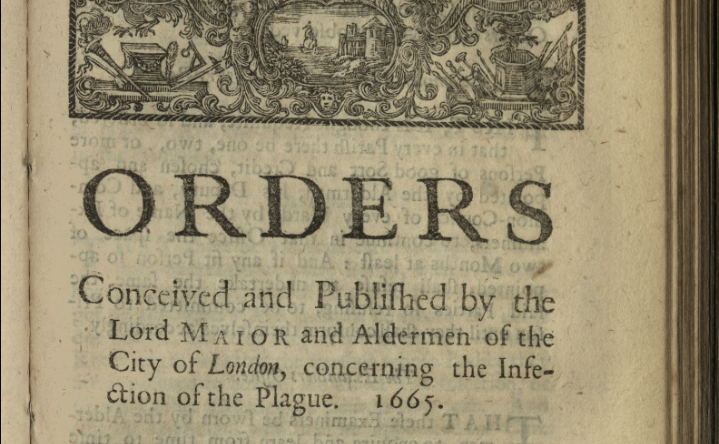
You can read the Plague Orders that were given in London in our Source Gallery.
All of these responses still couldn’t stop the plague. It was by chance that the Great Fire of London in 1666 eventually ridded London of the plague in the end.
Impact of the Great Plague
The Great Plague had a significant death rate. The greatest impact was on poorer people living in the worst conditions, who didn’t have the means to flee towns and cities and were instead quarantined in their homes.
From 1667, the plague didn’t ever return to England and there is no known reason why. This meant the government could move their attention to improving living conditions in towns and cities overall.
Case Study: Eyam, 1666
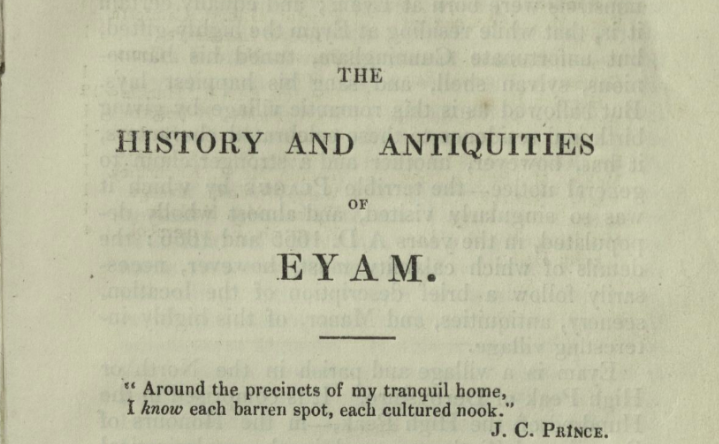
Eyam is a small village in the county of Derbyshire that had a population of around 350 people at the time the Great Plague arrived. Not only was Eyam hugely impacted by the Great Plague, but Eyam had a huge impact on preventing the spread of the plague in neighbouring villages.
The History and Antiquities of Eyam is a book that documents the way the 1666 outbreak of plague was handled in the village of Eyam through eyewitness accounts and historical evidence. It’s a useful source that helps us understand why the plague had such a huge impact on Eyam, and how the village responded proactively to prevent the spread.
One of the reasons the plague had such an impact on the village of Eyam is because of its size compared to big cities like London.
“…about one-sixth of the population of London fell victims to this appalling pestilence ; but at Eyam, five-sixths were carried off in a few months of the summer of 1666 […]. This dreadful scourge at Eyam has no parallel ; not even that of the “Black Death” of the fourteenth century.”
People in London could flee to the countryside and access help, but the villagers in Eyam couldn’t. When people in Eyam died, it might be your neighbour or even a family member.
In London “the populace were not restrained as to flight ; there they could easily obtain medical aid ; there neighbour knew not neighbour ; there thousands might die without being intimately known to each other.” However, in Eyam, “the death of every one would be a neighbour, if not a relative”.
Eyam’s rector , Reverend William Mompesson, and Eyam’s former rector, Reverend Thomas Stanley, took action to help prevent the spread of plague in Eyam and beyond.
Mompessen warned everyone of how dangerous it would be to flee Eyam, telling them that “the safety of the surrounding country was in their hands ; that it was impossible for them to escape death by flight ; that a many of them were infected ; that the invisible seeds of the disease lay concealed in their clothing and other articles they had prepared to take with them”.
“…the inhabitants, with a superhuman courage, gave up all thoughts of flight“.
Mompessom and Stanley created a quarantine zone in Eyam, also known as a cordon sanitaire, which helped prevent the spread of the plague to other nearby villages.
Mompessen wrote to the Earl of Devonshire who lived nearby at Chatsworth House to explain how the people of Eyam would “confine themselves within the precincts of the village if they could be supplied with victuals and other necessary articles, and thereby prevent the pestilence from spreading” and the Earl “generously ordered the sufferers to be supplied with all kinds of necessaries”.
“A kind of circle was drawn round the village, marked by particular and well known stones and hills ; beyond which it was solemnly agreed that no one of the villagers should proceed, whether infected or not.”
“…it was to the prescribing of this boundary and other precautions attendant thereon, that the country around was saved from this most horrible pestilence.“
Quiz yourself!
Want to share feedback on this content? Get in touch or fill out the form.

