


Women Doctors
Even though a lot had changed by the 19th century, one thing hadn’t: being a doctor was seen as a male job. It was almost impossible for a woman to become a doctor, with universities refusing entry to women who wanted to take on medical training. But this was all about to change…
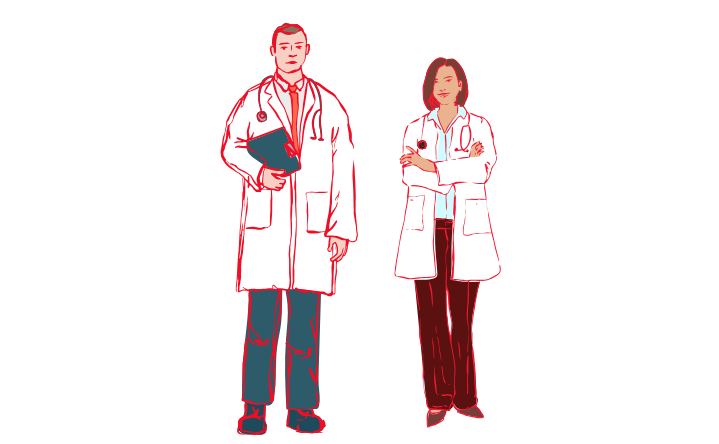
Elizabeth Garrett-Anderson
Born in 1836, Elizabeth Garrett-Anderson was one of the first women to become a doctor in Britain in 1865. Garrett-Anderson’s parents had enough wealth to provide her with a private education, but even that wasn’t enough for a university to accept her for medical studies. She studied nursing, worked as a surgery nurse and took her exams with the Society of Apothecaries (who didn’t have a specific rule that banned women from taking medical exams). On passing her exams, she received her medical licence which meant she could become a doctor. Garrett-Anderson gained higher marks than everyone else taking the exams! Instead of celebrating this, the Society of Apothecaries introduced a rule to stop women from taking the exams in future.
Even with her licence, Garrett-Anderson couldn’t get a job working in a hospital, so she decided to set up her own practice that provided outpatient treatment for poorer people. By 1872, this went on to become the New Hospital for Women and Children and was entirely run by women. Garrett-Anderson even learned French so she could work towards a medical degree at a medical school in Paris called the Sorbonne where women weren’t refused. She became the only female member of the British Medical Association in 1873, and in 1874 she helped open the London School of Medicine for Women (the only hospital where women could train in Britain).
Sophia Jex-Blake
Born in 1840, Sophia Jex-Blake fought for women’s right to a medical education. Born into a wealthy family, like Garrett-Anderson she was privately educated and went on to study at Queen’s College in London. Jex-Blake originally wanted to become a teacher, and was invited to become a mathematics tutor at Queen’s College. However, her father had a firm belief that his daughter should not work for payment so he would only let her take the tutor role unpaid.
Instead, Jex-Blake went to the USA in the hopes that she could study medicine at Harvard. It was after this trip that she became invested in becoming a doctor, and decided to apply to Edinburgh University in 1869 to study medicine. Of course, Jex-Blake was rejected. Edinburgh University said it was because they weren’t able to accommodate a single female student, so she began campaigning for other women to join her. After advertising it in newspapers across Scotland, Jex-Blake found more women students who were eventually accepted to study medicine at Edinburgh University. These women, including Jex-Blake, became known as the ‘Edinburgh Seven’. Even though they were able to study medicine, they weren’t exactly welcomed with open arms by the male staff and students!
Did you know?
The Surgeon’s Hall Riot took place on November 18th 1870 after a large group of male students gathered outside Surgeon’s Hall to prevent the women students from taking their anatomy exam in protest of their presence at the university.
Quiz yourself!
Want to share feedback on this content? Get in touch or fill out the form.

