


Housing
Housing in Industrial Britain still remained a problem for poorer communities. People who had moved to a new town or city in search of factory work might stay in a lodging house with their family while they looked for a place to rent. A typical lodging house was a big, old house that had been split up into smaller rooms. They were usually overcrowded and dirty, with lots of people squashed together in small rooms and sleeping side by side. Of course, this was the perfect breeding ground for disease. It was common for people to pick up typhus in a lodging house.
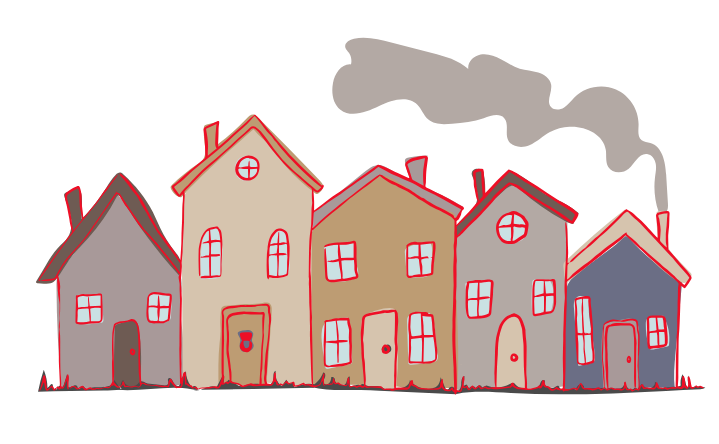
If you were a lucky, your family might have a through house with a yard, but most people lived in back-to-back houses. Back-to-back houses were terraces that were joined to another house at the back, as well as the sides, which is where they get their name. These were built in an attempt to fit as many homes as possible within a small piece of land. Back-to-back houses were difficult to ventilate, so people would develop chest infections or even worse. The poorest people couldn’t even afford to rent a back-to-back house, so would dwell underground in other people’s basements. It’s thought that housing at that time was a significant cause of death in Britain.

Because towns and cities were growing so quickly during the Industrial Revolution, landlords took the opportunity to make money from the workers by building houses for them to rent. However, they built these houses quickly and cheaply, and there were no laws in place to protect renters like we have today. So, the reality was, most housing was in poor condition and nobody could do anything about it!
Diet
Diet had a huge impact on the nation’s health in Industrial Britain. From 1750, the population of Britain increased dramatically. With the development of machinery in agriculture, farming managed to keep up with the growing population so nobody would have to starve. However, it was impossible to grow crops within the towns and cities, so the only option for people living and working there was to buy their food from street-sellers and shops. Even then, labourers still couldn’t afford to feed their families enough because income was so low. A typical diet for a labouring family included bread, butter and potatoes washed down with tea. It’s no wonder people became malnourished and unwell!
Food quality was also a big problem. It wasn’t until the late 19th century that food could be preserved in tins or refrigerated. On top of this, the government still had a laissez-faire approach to public health and didn’t think it was their responsibility to manage food quality, so they stayed out of it. This led to the adulteration of food in the early 19th century, which meant sellers were dishonestly advertising food that was actually a mixture of other things. For example, milk would be mixed with chalk and water so more could be sold, or copper would be stirred into butter to change its colour. As a result, food poisoning and diarrhoea were pretty common!

Drinking alcohol was all too common in Industrial Britain, and it didn’t matter what class you were. Workers drank in the pub where they could seek warmth and companionship. Some of the poorest people drank large amounts of beer, whisky and gin, and struggled with alcohol addictions. Middle-class people would drink wine over their evening meal, and middle-class men drank large amounts of port and brandy. None of this was particularly good for people’s health!
Water
Access to clean water had long been a problem for Britain, and with the significant growth of industrial towns and cities, things didn’t improve. Water wasn’t typically piped into poor housing, and where there were pumps made available by water companies, entire streets would often share them. If a landlord had only paid the basic rate for the bare minimum amount of water, this meant the water might only be running for a couple of hours each day.

Lots of poorer people couldn’t afford to pay the water companies, so would instead access water from a nearby river. If that wasn’t possible, they’d have to travel further to find water elsewhere in a pond or stream. No matter where people got their water, it was always dirty. Whether it was sold by water companies from polluted rivers, or had fallen as rain through the smoky industrial air, water was usually contaminated by something! Those who could afford it would filter their water, but of course this wasn’t possible for most people. Either way, nobody had any idea that the water everybody was drinking was spreading germs and disease.
Waste
Waste was already piling up during the Renaissance, but now that the towns and cities were even busier, it became an even bigger problem. Human waste was the biggest threat to people’s health. The majority of the new homes built to house labouring families didn’t have sewers. This meant huge puddles of human waste and water built up in the streets. In those areas that did have sewers – because they’d originally been designed to pipe away excess rain water – the waste was taken away and flowed right into the river where people got their drinking water.
Until halfway through the 19th century, privies were still in use. But because of back-to-back housing, it meant multiple families would all share one privy. Sometimes a privy would be linked up to a cesspool. At night, when the cesspool was full, the “night soil men” would collect the sewage in a bucket, put it on their cart, and sell it on to farmers. If a landlord hadn’t paid for this service, the cesspools would overflow and leak out into the street. But, even worse, if the leak happened by a nearby well or pump, human waste would end up in the water supply and the consequences were deadly.
This was the way toilets had worked for generations, but this method wasn’t built to last with such a growing population! Things became really bad when more and more wealthy families began using water closets – otherwise known as flushing toilets. Although the flushing systems were originally linked up to cesspools, in the early 1800s they were connected to the sewers. This meant for lots of towns and cities, dirty toilet water was being flushed into the very rivers the water companies used. So no matter whether you were rich or poor, you paid the water companies to drink water full of human waste!
Industry
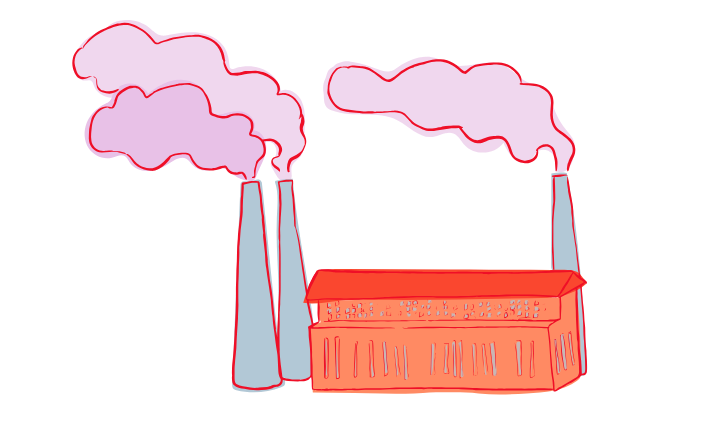
Because of industrialisation, lots of people worked in factories in towns and cities. This new work came with new risks. Because of the dangerous working conditions, many workers were injured or even killed in workplace accidents. The government didn’t regulate things like we’d expect them to today, so this was the norm! For those workers who managed to avoid accidents, it was likely they’d be deficient in basic vitamins and may even develop rickets from working indoors for long hours. This wasn’t just adults – children often worked to earn a living for their family. Boys might be working up chimneys and girls might work making matches, all of which came with huge health risks. No wonder life expectancy was much higher for richer people who didn’t have to take on risky work!
The factories even had an impact on people who didn’t even work in them! Smoke filled the air across towns and cities, so everybody was breathing it in.
Quiz yourself!
Want to share feedback on this content? Get in touch or fill out the form.

