


The Arrival of Cholera in Britain
Disease was widespread across industrial Britain as people moved in huge numbers to the towns and cities in search of factory work. From typhoid to tuberculosis, diseases swept through the overcrowded houses where labouring families lived, often with nasty symptoms and resulting in death. Cholera was one of these deadly diseases.
It arrived in Britain in 1831 when a ship docked in Sunderland, where the first cholera case was reported in October that year. It’s thought that it came from India before it reached Europe through trade. When it came to cholera, age or class didn’t matter. Nobody was safe!
Symptoms
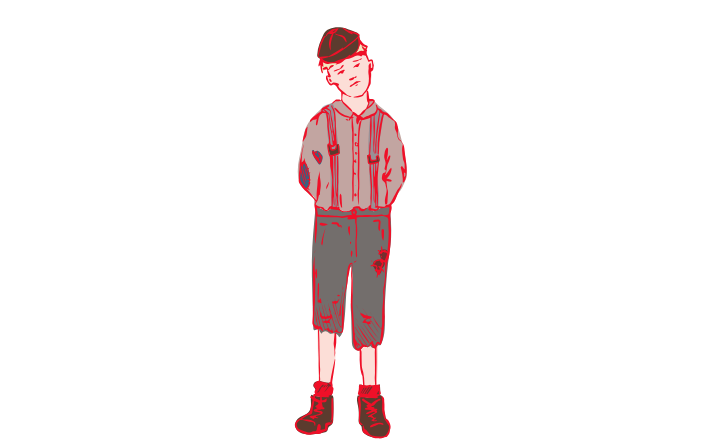
You really didn’t want to catch cholera. One minute you’d be perfectly healthy, the next minute you’d be violently ill and could die within a matter of days, or even hours. The main symptoms included:
- Diarrhoea and vomiting, which led to dehydration
- Blue skin caused by blood vessels bursting
- Organ failure due to poor blood flow
Once a victim’s organs had failed, death wasn’t far away.
Beliefs about the Cause
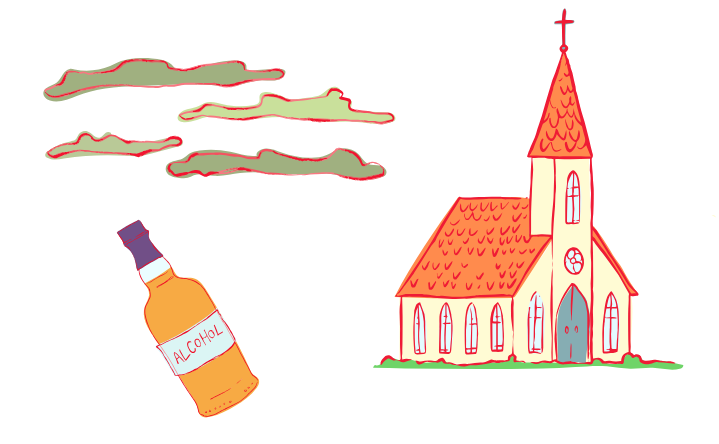
At the time, people had no idea that cholera was a bacterial infection spread by contaminated water. Instead, people believed:
- Drinking too much alcohol would make you more likely to catch cholera
- Cholera was sent by God as a punishment for people’s sins
- Cholera was caused by miasma
These beliefs weren’t too dissimilar to what people believed back in the medieval era. So because people didn’t know the real reason cholera was spreading rapidly, it meant they weren’t able to avoid it.
Prevention and Treatment of Cholera
Until the real cause of cholera was discovered, people responded based on what they believed.
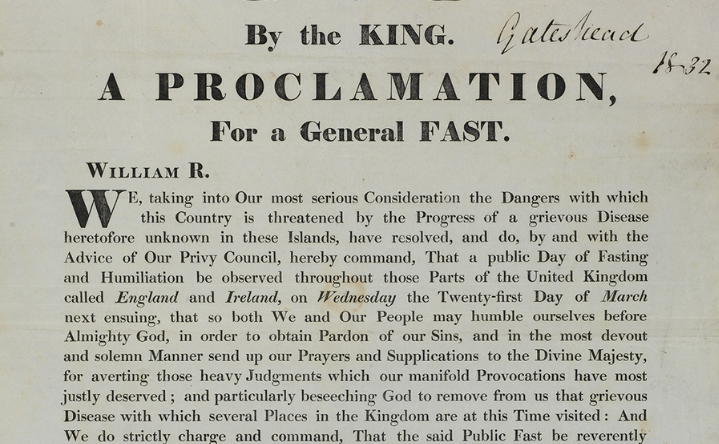
Because most people believed that God had sent cholera as a punishment for people’s sins, the King proclaimed a ‘public day of fasting and humiliation’ to be held on Wednesday 21st March 1832 “so that we and our people may humble ourselves before Almighty God, in order to obtain a Pardon of our sins“.
Advice was shared via newspapers and notices, recommending different treatments. These recommendations ranged from herbal medicines that could allegedly cure cholera, to things people could do at home like staying warm and avoiding alcohol.
Because of society’s belief in miasma, in some places, barrels full of tar were burned in the streets in attempt to clear the bad air, and people sometimes even paid to have their rubbish removed.
Did You Know?
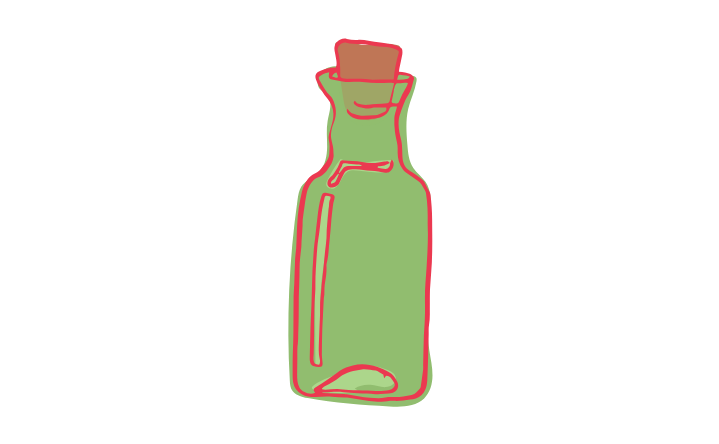
Common treatments for cholera included poultices (pastes applied to the skin) or tinctures (solutions made up of alcohol, water and animal or plant materials that could be swallowed or applied to the skin). These of course didn’t cure anybody!
Government Response
Although the cholera epidemic was deadly, it did lead to some important changes. The government couldn’t be laissez-faire about living conditions any longer – something had to change. Towns were advised to voluntarily organise local boards of health (though this wasn’t enforced). Local boards of health were responsible for printing advice posters and keeping informed about cholera outbreaks in their area. This didn’t solve the problem of public health completely, but it was a starting point!
John Snow’s Discovery
Because nobody knew the real reason for the spread of cholera, they couldn’t stop it. That is until John Snow made his breakthrough discovery. Born in 1813, John Snow was an English doctor. After working as an apprentice to a surgeon at the young age of 14, Snow moved to London to train as a doctor.

He was certain that cholera was spreading through water, and following the 1848 epidemic, published his findings in On the Mode of Communication of Cholera. Unfortunately, people were still convinced by the miasma theory and rejected his ideas.
Snow worked in Broad Street in the Soho area of London. So, In 1854, as cholera rapidly spread through the capital once again, Snow decided to study cases of cholera in Soho closely to try and prove how and why it was spreading. By going door-to-door, Snow was able to gather evidence that allowed him to map out where people were dying of cholera. This was how he realised all of these deaths had one thing in common: they had accessed water from the Broad Street water pump.
In contrast, the workers at the nearby brewery (who drank beer rather than water!) were all fine. Snow also discovered a family living in the area had been sending water from the Broad Street pump to their relative who lived outside of the area because she liked the “sweet taste”, and she died! All of this helped back up Snow’s claims even further, and he eventually convinced the local authorities to remove the pump handle so people would have to collect their water elsewhere. From then on, there were no more cholera deaths on Broad Street. It was later discovered that a nearby cesspit had been leaking, which contaminated the water.
Case Study: Cholera in Gateshead
Find out about how cholera impacted on the community of Gateshead from history lecturer, Dr Shane McCorristine.
Quiz yourself!
Want to share feedback on this content? Get in touch or fill out the form.

