


Florence Nightingale
Born in 1820 into a wealthy family, Florence Nightingale is most famous for her huge impact on the nursing profession. She is commonly referred to as ‘the lady with the lamp’, as she was often seen carrying a lantern along dark hospital corridors while going to check on patients. Nightingale believed she was called by God into the nursing profession as a way to help people. Her family were completely against the idea, so she left home to train in Germany and Paris.
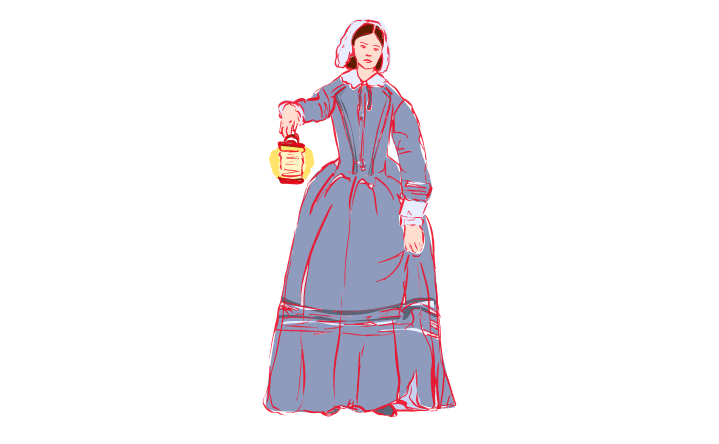
Crimean War
The Crimean War broke out in 1854, not long after Nightingale had completed her nursing training. Due to advances in technology and the introduction of the telegraph system, for the first time the war was reported in detail back home in British newspapers. Nightingale was appalled by the conditions of the military hospitals where British soldiers were being treated after reading some of these reports. Nightingale wasn’t the only one – the British public were also horrified, which put pressure on the government to do something about it. She offered her services and with the help of government funding, Nightingale travelled to Turkey with 38 other nurses to provide care for British soldiers at Scutari Hospital. When they arrived, Nightingale and the other nurses were completely shocked. The hospital was dirty, there weren’t enough supplies for the amount of patients, and lots of the soldiers had contagious diseases like cholera.

Nightingale set about with the first and most important task: cleaning. Her and her team cleaned the entire hospital, ensured the soldiers were regularly washed, and set up a laundry to ensure clothes and sheets could be regularly changed too. Windows were opened to ensure fresh air could circulate, soldiers were relocated around the wards based on the different illnesses they had to prevent the spread of infection, and beds were spaced out. Nightingale also cared about bedside manner, and cared for the soldiers with respect and kindness. After only six months, the hospital’s death rate dramatically fell from 42% to 2%!
Did you know?
Florence Nightingale believed in the idea of miasma (that diseases spread through bad smells in the air), which led her to clean up the hospital. So, even though her actions saved lives and changed the nursing profession forever, she didn’t actually know she was preventing the spread of germs!

Impact: Nursing
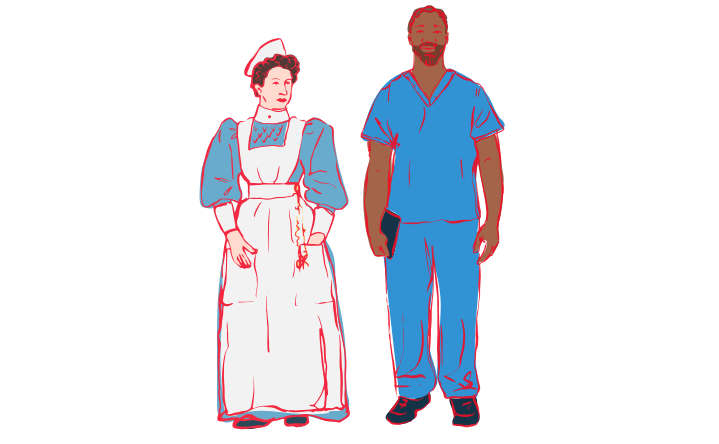
Nightingale’s impact during the Crimean War was hugely significant. When she returned to Britain, she raised over £44,000 in support of her work (which is the equivalent of around £2 million in modern money!). Nightingale used this money to open Britain’s first ever training school for nurses at St Thomas’ Hospital in London, and published her famous guidebook, Notes on Nursing in 1859. Notes on Nursing set the standard for nursing for generations, and was specifically aimed at women. The book outlined how nurses should be trained and how nurses should care for their patients, based on what Nightingale learned during the Crimean War. This convinced people to take nursing more seriously as a respectable job, which led to an increase in new nurses going into training and new nursing schools being opened. You can take a closer look at Nightingale’s Notes on Nursing in our Source Gallery.
Impact: Hospitals
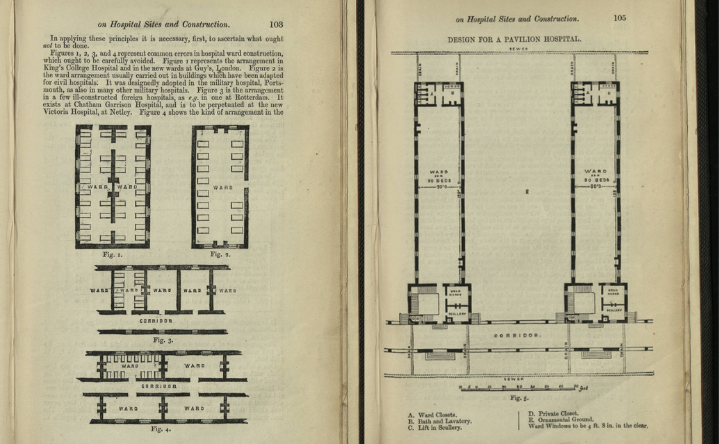
Nightingale also published a book called Notes on Hospitals. This time, her guidance related to the design of hospitals. She recommended that when hospitals were being planned, ventilation, light and cleanliness should be considered. Nightingale came up with what is known as the ‘pavilion principle’ or ‘pavilion style’, which included separate wards connected by a long corridor. This helped the flow of clean air and meant medical staff could control infection in each ‘pavilion’. By 1900, many new hospitals had been built across Britain using Nightingale’s design ideas.You can take a closer look at Nightingale’s Notes on Hospitals in our Source Gallery.
Did You Know?
More recently, people have questioned whether Florence Nightingale’s true impact was exaggerated by newspapers at the time.
Mary Seacole
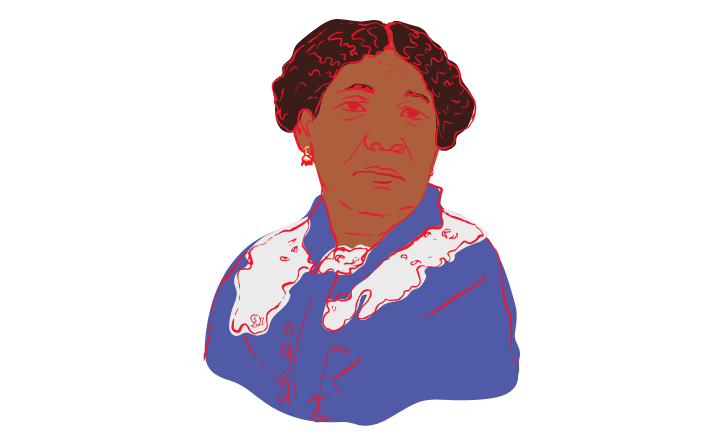
Florence Nightingale wasn’t the only British nurse who had an impact during the Crimean War. Born in Jamaica in 1805, Mary Seacole came to Britain in 1823 and, like Nightingale, offered to support in the Crimean War. She did this without the funding that Nightingale received. Seacole’s mother cared for British soldiers and sailors while running a medical centre in Jamaica, which is where she found her passion for nursing. During the Crimean War, Seacole cared for soldiers, and even went out onto the battlefield during warfare to tend to wounds. When she returned to Britain after the war in 1857, news of Seacole’s work had reached home and a fundraising gala was held for her in London, where over 80,000 people attended. Later that year, she published her autobiography The Wonderful Adventures of Mrs Seacole in Many Lands. The book quickly became a bestseller, and showcased the efforts of nurses during the Crimean War.
Elsie Cadwaladr
Betsi Cadwaladr was another nurse who cared for soldiers during the Crimean War. Born in Wales in 1789, Cadwaladr ran away from home as a teenager and eventually travelled to London and discovered the nursing profession. From 1815 to 1820, she visited Australia, Africa and South America as a maid to the captain of a ship. When she returned home to London, Cadwaladr began her nursing training. Like Nightingale and Seacole, at the age of 65 she travelled to Turkey to treat British soldiers fighting in the Crimean War. It was said that Nightingale and Cadwaladr didn’t get along, so she left Scutari Hospital and went to help at Balaclava instead. She worked long days, changing dressings and treating wounds, until she unfortunately caught cholera and dysentery. Because of her ill health, Cadwaladr was forced to travel home to Britain in 1855 and died five years later.
Quiz yourself!
Want to share feedback on this content? Get in touch or fill out the form.

