


Public Health Reforms
People’s living conditions in industrial Britain played a huge part in poor health and short life expectancies, but the government still seemed to take the same laissez-faire approach. However, with repeat visits from deadly diseases like cholera, the government finally stepped in to take action.
Edwin Chadwick’s Report on the Sanitary Condition of the Labouring Population, 1842
Edwin Chadwick worked as a Secretary to the Poor Law Commissioners, and was certain that there was a link between living conditions, disease and poverty. Chadwick conducted an investigation into health in Britain in the late 1830s, publishing his findings in his famous Report on the Sanitary Condition of the Labouring Population in 1842. Chadwick’s report urged for action to be taken to improve living conditions in Britain in response to the evidence he found during his investigation. This would mean increased life expectancy for working people, so would help the economy too.
To us now, it’s clear that Chadwick’s report provided clear evidence that Britain needed cleaning up in order to improve the population’s health. But back then, Chadwick’s report wasn’t welcomed with open arms. Many people believed the work he suggested was too expensive or that the central government shouldn’t get involved in the business of individual towns. Those who supported Chadwick became known as the ‘Clean Party’, and those who didn’t were known as the ‘Dirty Party’.
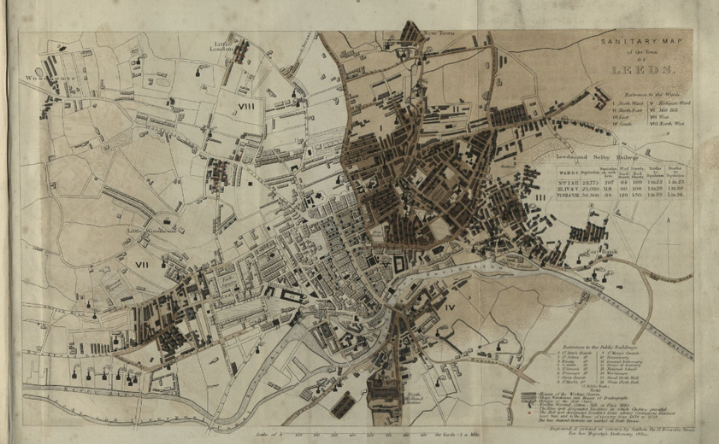
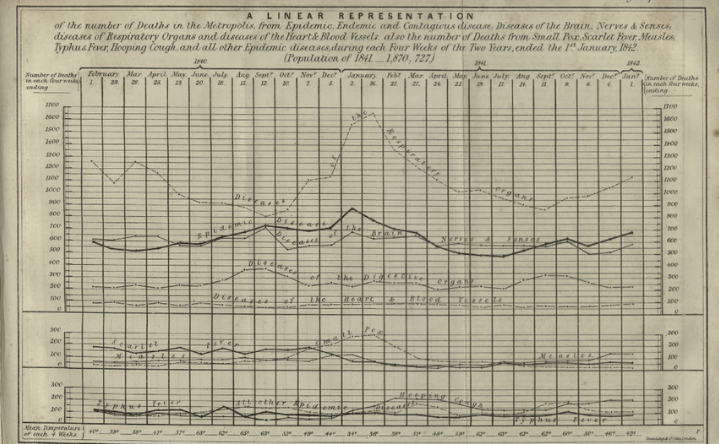
You can view an extract of Chadwick’s report in our Source Gallery, which includes maps, graphs and tables that show us the state of public health at that time.
1848 Public Health Act
In 1848, another cholera epidemic arrived in Britain and the government finally began to lose its laissez-faire attitude once and for all. After tens of thousands more deaths, they were forced to listen to Chadwick and act. So the government passed the 1848 Public Health Act inspired by Chadwick’s recommendations. This act meant that:
- The Central Board of Health was set up
- Local authorities were encouraged to set up local Boards of Health
- Local authorities were encouraged to appoint a Medical Officer, whose job it was to look after public health in their area
- Local authorities were encouraged to connect all households to clean water and sewers
- Local authorities were encouraged to inspect food being sold in their area
Importantly, the guidance for local authorities was optional and never made compulsory. It meant local councils could take action in their towns if they wanted to. They were also expected to pay for this themselves, so you can imagine why people might not have bothered! The Act was only ever enforced in a town if the death rate became high. Because only some towns voluntarily made these changes, the 1848 Public Health Act ultimately failed.
The “Great Stink”
In the summer of 1858, the “Great Stink” hit London. It was so hot that the River Thames had begun to dry up, so all of the waste in the river began to stink – as the name suggests! Those politicians who could afford it left London immediately, and the curtains in the House of Commons were soaked in chloride of lime to try and cover the smell. The smell alone was enough for the government to worry about another cholera epidemic, so they decided to take action to improve London’s sewers.
Joseph Bazalgette, the Metropolitan Board of Works’ chief engineer, came up with an idea to solve the sewage problem, but it came at an expense. In fact, the work would cost roughly £1 billion in today’s money! Bazalgette designed a system that would take waste away from people’s houses. The sewers were finally opened in 1865. It’s no wonder it took 7 years, Bazalgette built 1300 miles of sewers across the entire capital city and they are still in use today!
1867 Reform Act
The 1867 Reform Act didn’t directly relate to health, but still had a significant impact on people’s wellbeing. This act allowed working-class men in towns and cities to vote for local members of parliament (MPs) and town councillors, which meant politicians would finally hear directly from those living in poverty. And, importantly, these people could vote them out if they didn’t serve their community.
1875 Public Health Act
The second Public Health Act was different to the first. The 1848 Public Health Act provided recommended measures that should be voluntarily carried out, but this time, in 1875, the measures were made compulsory. This act meant that local authorities had to:
- Choose a Medical Officer, whose job it was to look after public health in their area
- Choose a Sanitary Inspector, whose job it was to make sure slaughterhouses and shops didn’t sell contaminated food
- Supply clean water to every household
- Arrange for rubbish to be collected and taken away to be disposed of properly
- Keep sewers covered and in good condition
- Provide lighting in the streets
- Take responsibility for public spaces, like parks and public toilets
This act ultimately forced local councils to take responsibility for public health in their town. It meant that people began living longer, healthier lives free from diseases like cholera.
1875 Artisans’ and Labourers’ Dwellings Act
Sometimes known as the 1875 Housing Act, the Artisans’ and Labourers’ Dwellings Act banned new back-to-back housing from being built. This act set a new standard for housing, and meant local councils knocked down slum housing to replace it with higher quality homes.
1875 Sale of Food and Drugs Act
The Sale of Food and Drugs Act introduced the idea of food standards, which prevented people from adulterating food by adding potentially dangerous ingredients to bulk it out. This act also introduced regulations for selling medicines.
1876 Rivers Pollution Prevention Act
The Rivers Pollution Prevention Act was pretty self-explanatory – it was created to prevent people from dumping waste into rivers. Through this Act, it was made illegal to pollute rivers, with a board set up in each town responsible for making sure this law was upheld.
Quiz yourself!
Want to share feedback on this content? Get in touch or fill out the form.

