


William Harvey
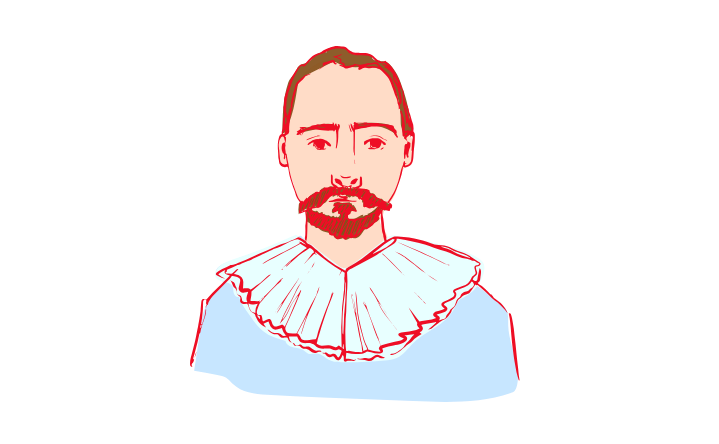
William Harvey was born in 1578 in Kent. He studied medicine at Cambridge University before moving on to the University of Padua in Italy. After completing his studies, he came back to England in the early 1600s to work as a physician. He was even made physician to James I and Charles I!
Circulation of the Blood
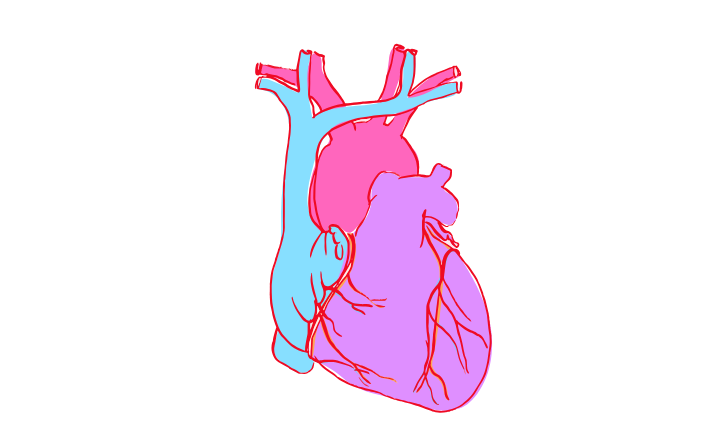
While studying anatomy at the University of Padua, Harvey was introduced to the new idea that our veins have valves. However, at this time it wasn’t known that these valves pump blood in a circular motion around the body. Harvey discovered this through experimentation. He ran hundreds of tests on live animals to get a better understanding of how the heart works, carefully studying veins and arteries. This led him to discover the important difference between the two: arteries take blood away from the heart, and veins take blood towards the heart.
Harvey’s discovery was a huge breakthrough. Until now, people believed in Galen’s theory that the liver was the centre of the body, creating new blood to replace any blood that was lost in the body. However, Harvey proved that the heart is actually the centre, pumping blood in a “one-way system” all around the body. His new theory also created a challenge to ideas about medical treatment at the time, and meant bloodletting (which was meant to rid the body of too much blood) would not work as society once thought.
Did you know?
Harvey experimented on cold-blooded animals like frogs as their blood moves more slowly, which helped him see blood being pumped around the animals’ bodies more clearly.
An Anatomical Account of the Motion of the Heart and Blood in Animals
After making all of these discoveries, in 1628 Harvey was able to publish his hugely influential book, Exercitatio Anatomica de Motu Cordis et Sanguinis in Animalibus, otherwise known as An Anatomical Account of the Motion of the Heart and Blood in Animals or The Motion of the Heart for short. Although Harvey’s book was only short (around 70 pages long), it covered some of the most important ideas in the study of circulation.
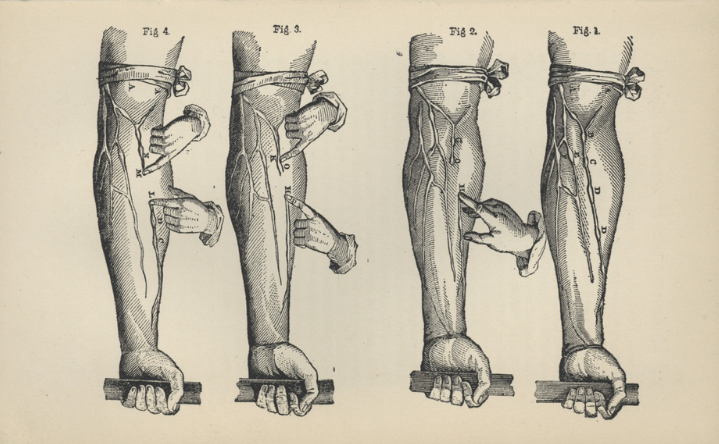
Harvey’s most well-known experiment can be seen in this image, where you can see the blood moving through the patient’s arm. This helped him prove his “one-way system” theory, and that the heart acts as a pump. You can look at it more closely in our Source Gallery.
Impact
Harvey had a huge impact on the medical world. However, many people were against him and his ideas because his findings disproved the work of Galen and the Theory of the Four Humours, which had been taught and respected for a very long time. People also questioned Harvey’s scientific approach, as traditional medical learning was centred around reading, not experimentation.
Despite being rejected by lots of people in the beginning, Harvey’s work was eventually accepted and changed history, paving the way for future discoveries and important treatments like blood transfusions.
Quiz yourself!
Want to share feedback on this content? Get in touch or fill out the form.

