


Paul Ehrlich
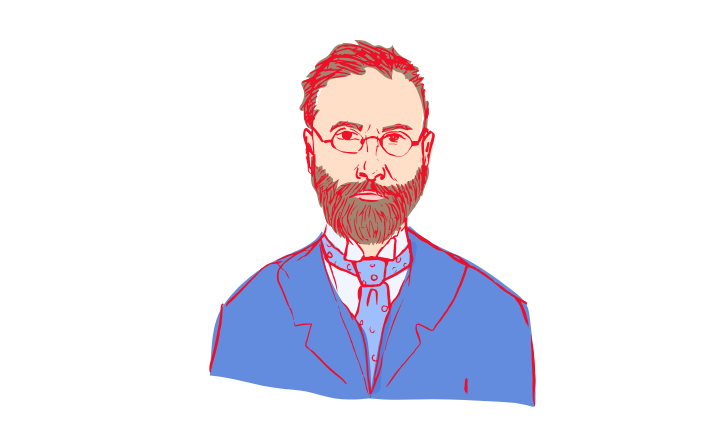
Paul Ehrlich was a German scientist who originally worked for Robert Koch. He is known for firing the first “magic bullets” with his colleague, Sahachiro Hato. In 1908, Ehrlich won a Nobel Prize for his contributions to medicine.
Magic Bullets
After working closely with Koch, who had developed a method for identifying bacteria with dye, Ehrlich was determined to find a way to not only identify different germs, but to kill them too. He described the idea as being like firing bullets that would magically find and kill bacteria that caused people to be ill, without damaging anything else in the process.
Salvarsan 606
Syphilis was a significant problem in Britain at the time, and had been since the Renaissance. It’s a sexually transmitted disease (or STD) which, if left untreated, could be fatal. Ehrlich put all of his efforts into trying to find a “magic bullet” that would target syphilis, but it wasn’t easy. He spent years and tried 100s of different drugs to try and kill the bacteria that caused syphilis, but nothing seemed to work. That was until 1909, when his new research assistant Dr Sahachiro Hata double-checked Ehrlich’s results and pointed out that his 606th try (which was originally thrown away for not working) actually worked! This was the moment the world’s first ever chemical cure for disease was discovered, and it was named Salvarsan 606 after the number of tries it took to find it.

Prontosil

Although the first “magic bullet” was discovered in 1909, it wasn’t until 1932 that the next “magic bullet” was fired. At this time, blood poisoning was a huge risk to people’s lives. Gerhard Domagk, a German scientist, realised a specific kind of red dye seemed to work against blood poisoning. First he tested the dye out on mice, then his daughter after she developed an infection from pricking her finger, and it worked! This new drug was named Prontosil.
Impact
The discovery of “magic bullets” that would target specific germs without attacking the rest of the body had a worldwide impact. Soon after the development of Prontosil, a range of chemical cures were discovered for diseases that were deadly at the time.
Quiz yourself!
Want to share feedback on this content? Get in touch or fill out the form.

