


Housing
By 1900, you might think housing was no longer a significant problem. However, for the poorest people in Britain, it was still a big issue. People still lived in dirty, cramped conditions in back-to-back houses. That is until the government intervened, passing the Housing Act of 1919. This led to new council houses being built within guidelines set by the government, so they couldn’t be in the same poor condition as the housing that had come before. Local councils became landlords for those who were living in poverty, and set up housing committees to look after these new council houses. Even with these changes, the worst slum housing was still occupied by the poorest people, until private landlords were forced to sell any slum housing they owned to the council so new houses could be built in their place.

Technological advances meant that gas and electricity could be used for cooking and heating homes, so people didn’t need to carry heavy coal to their houses and up any stairs. This meant local councils could start building blocks of flats, something completely new and different at the time that didn’t require the same amount of land as traditional housing. Because so many houses were destroyed by bombing in World War Two, council housing was built in this style for the next thirty years to replace those houses that had been ruined. Councils who built taller blocks that were over 6 storeys would be rewarded with extra funding! Once lifts had been invented, blocks of flats could be built even taller. These new flats were a big improvement from the back-to-back houses people were used to, but were quite lonely and isolating because of their layout.
Diet

Advances in science and technology meat that Britain’s diet improved significantly by the twentieth century. Food adulteration could be detected, meat could be refrigerated during transportation, and canned goods like baked beans meant food would keep for longer. People no longer had to shop on street markets because grocery stores began opening. These grocery stores were open everyday and were well-stocked with consistent products. Workers even had enough money to purchase the food they needed because food prices decreased while wages were increasing. Food that only the richest people could afford now became easy to access for working people. So sweets and chocolate became more of a staple part of people’s diet – yum!
As wages increased and women started to work, families became wealthier. This meant lots of people had a working refrigerator in their house and could purchase ready-made meals to fit in with their busy lives. Food options became more diverse as immigrants came to Britain in search of work after 1945, and people were able to travel and try new foods. The first microwave was invented in the 1950s in the USA, which made cooking easier and more convenient.
Since the 2000s, scientists have looked into Britain’s diet and believe that our modern lifestyles could be having a huge impact on our life expectancy. A combination of poor diet, drinking too much alcohol and inactivity can lead to health conditions such as obesity, which can then lead to further complications like heart disease.
Did You Know?
Rickets was a disease that affected workers in the industrial period, and children get it today! This is because the modern diet often includes processed and takeaway foods, which means children can become malnourished and not get the vitamins they need even if they eat plenty. Children also spend more time indoors watching TV or playing games than in the past, so don’t see as much sunlight as they should.
Pollution
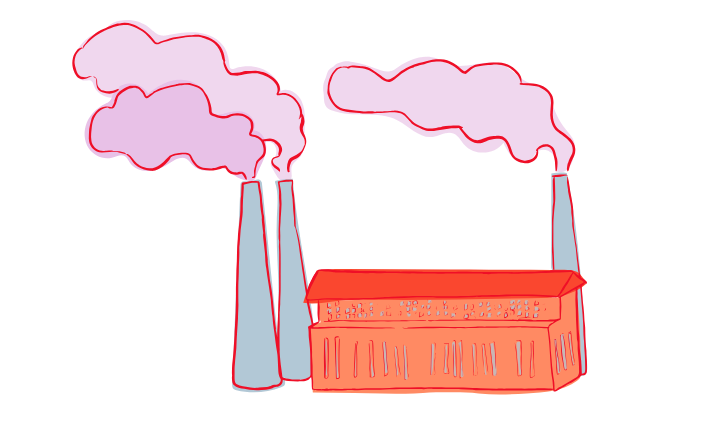
By 1950, Britain was consuming around 200 million tonnes of coal each year. Thick smoke from factories and chimneys filled the skies above big cities. Coal was such a normal part of people’s everyday lives, they couldn’t understand why it would need to be banned. It would be like banning driving cars today!
Even though people were keen to carry on using coal, it became a real problem. During the winter months, smoke would get trapped underneath a thick layer of fog and would sit in the air for days. People with weak lungs couldn’t get enough oxygen when the air was filled with smoke like this, which could lead to conditions like bronchitis or pneumonia, and even death. After the worst winter smog ever seen in London in the winter of 1952, the government stepped in to pass the Clean Air Act in 1956. This meant people had to use alternative fuels in certain areas, which started to improve things.
By the 1980s, smoke from coal wasn’t Britain’s biggest pollution problem anymore. Instead, it was cars. Originally, petrol engines released lead into the air through exhaust fumes, which is poisonous. Once this was realised, only lead-free fuel was allowed. In the early 2000s, the government began encouraging people to buy cars powered by diesel instead of petrol, believing this would cause less pollution. However, scientists have since proved that diesel causes even more harm than petrol. Because of the increased number of cars on the roads (both petrol and diesel), big cities have seen smog returning today. The government is taking this matter seriously, and new laws have been made to make sure all new vehicles have zero emissions by the year 2035.
Did You Know?
In 1905, the word “smog” was invented to describe the thick smoke that would hang in the air during the winter.
Quiz yourself!
Want to share feedback on this content? Get in touch or fill out the form.

