


New Technologies
There have been countless new discoveries made and new technologies developed over the last 100 years. Hospitals are more high-tech than ever before, and new treatments are being researched and trialled all over the world. Though things have significantly improved, there are still plenty of discoveries yet to be made and diseases yet to be cured.
DNA and Genetic Research
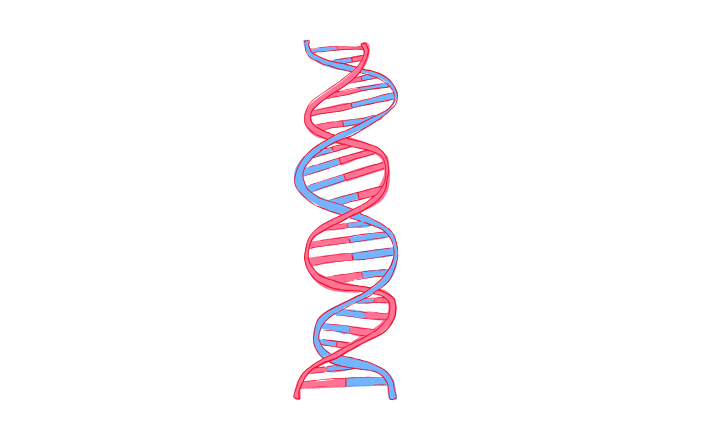
By the twentieth century, scientists began to realise that diseases weren’t just caused by germs, but that they could be passed down through the generations of a family from parents to children. Conditions that are passed on in this way are known as being hereditary. An Austrian scientist named Gregor Mendel worked this out in the 1860s, when he was studying peas. Yes, peas! He noticed that the peas weren’t all quite the same. Some peas were rotten and some peas were split, and he believed that these features were passed down from the parent plant. When he first published his research, people didn’t take any notice! But now Mendel is known as the Founder of Genetics‘.
By the 1950s, people had finally accepted Mendel’s theory and understood that living things can pass on characteristics to their offspring. Two pairs of scientists – James Watson and Francis Crick in Cambridge, and Maurice Wilkins and Rosalind Franklin in London – were trying to better understand DNA, which stands for deoxyribonucleic acid. Franklin (who doesn’t always get mentioned in conversations about DNA) managed to take a picture of DNA with an X-ray in 1951. Later that year, Wilson showed this X-ray to Watson who was visiting London. Watson and Crick studied the X-ray, and worked out that DNA is in the shape of a “double helix” (like the picture!).
Once the structure and properties of DNA were understood, it meant scientists could begin to find out how it actually works. In 1990 the Human Genome Project was set up. This was made up of 18 teams of scientists from all over the globe, who collaborated to map out the genetic blueprint of a human being. All of this research made it possible for doctors to identify the exact genes that cause a range of conditions, from cystic fibrosis and Down’s syndrome to type 1 diabetes and Alzheimer’s disease. In turn, this helps doctors work out if a patient is more likely to develop a certain disease and tailor medical treatments to their genetic makeup. Genetic engineering means the impact of certain diseases can be prevented and cloning was even made possible in 1996, when Dolly the sheep was cloned.
Scans
Since the invention of the X-ray, a variety of different scanning techniques and technologies have been developed.
Ultrasound scans
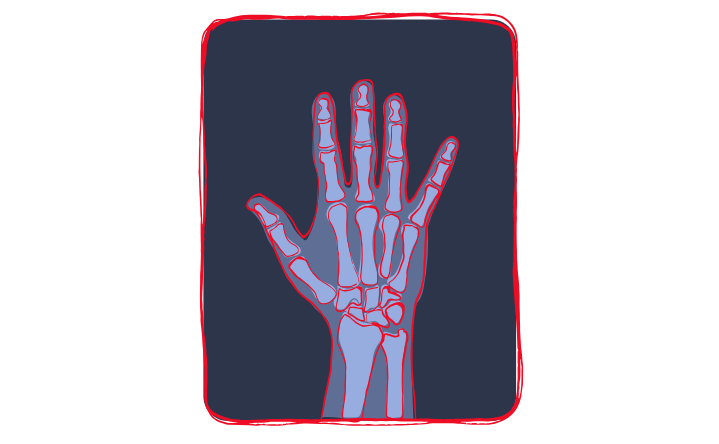
The idea of ultrasound scans was originally taken from World War Two. A system, known as ASDIC by the British and Sonar by the Americans, would detect German submarines through sound waves. This idea then crossed over into medicine, when people realised that sound waves could also be used to detect things inside the human body, by producing 3D images without the radiation used in traditional X-rays. Where X-rays can capture images of bones, ultrasound scans are used for capturing images of organs and muscles, and have been used during pregnancy to check on the development of unborn babies since the 1970s.
MRI scans
MRI scans, otherwise known as magnetic resonance imaging, create detailed images of tissues and organs through radio waves using powerful magnets. They allow doctors to see diseases clearly and understand whether or not treatments have worked.
CT scans
CT scans, otherwise known as computed tomography, take lots of X-ray images from different angles to create a cross-section of a particular area. This helps doctors locate illnesses in the body, and is often used for detecting cancerous cells. CT scans are very expensive!
PET scans
PET scans, otherwise known as positron emission tomography, are carried out on patients who are injected with a tracing dye into their bloodstream before being scanned, so doctors can gain a clear 3D colour image of tissues and bones. They’re also very expensive!
Endoscopes
Although it’s not quite considered a scan, endoscopes are also used to capture images of inside the body. With a tiny camera fixed to the end of a long tube, doctors can see into certain areas of the body without needing to perform surgery.
Treatments
There have been huge developments made in the treatment of illness and injury.
Transplants and joint replacements
In 1952, the first ever kidney transplant was carried out. Then, in 1967, the first ever heart transplant was carried out. Though initially successful, the patient died after 18 days after the transplant organ was rejected. This is still an issue today, but new immunosuppressive drugs have been developed that improve the chances of a new organ being accepted. Now, lifesaving transplants happen all over the world. Artificial joint replacements for knees and hips are also common today, and mean people who struggle with everyday movement like walking can become more mobile.
Surgery
Surgical techniques have advanced significantly since the twentieth century. The development of keyhole surgery means operations can be carried out without surgeons needing to create large cuts in people’s bodies. Lasers are commonly used in surgery to help improve people’s eyesight and treat diseases, and robots often assist in surgery to perform precise procedures.
Cancer treatment
As well as developing portable X-rays, Marie Curie and her husband discovered two radioactive elements called radium and polonium. These elements can help destroy tissue, making this discovery a gamechanger for cancer treatment. Radiation therapy based on Curie’s discoveries has been used in the treatment of cancer since the twentieth century, and over time has improved significantly. Radiotherapy typically involves a machine aiming radiation beams at the location of the cancer in the body of a patient. Patients undergoing radiotherapy often also receive chemotherapy alongside, which treats cancer cells with strong drugs. Although these treatments can control some cancer cells, cancer is one of the biggest health problems and causes of death in modern Britain, and early diagnosis is extremely important.
Dialysis
For people whose kidneys have failed, dialysis can be used to help remove waste from the body. A patient is connected to a dialysis machine, where their blood circulates through different filters to mimic the role the kidneys normally play when they work.
Pacemakers
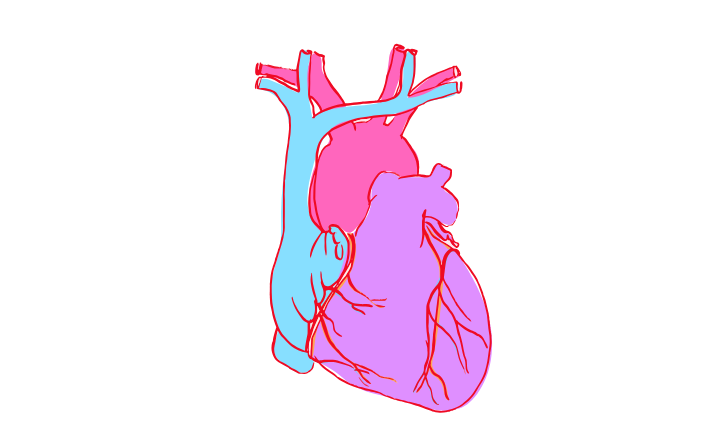
For people who have conditions that stops their heart from beating correctly – whether it’s too fast or too slow – an electrical device called a pacemaker can be implanted into their chest. While implanted, it uses electrical signals that tell the heart when it should beat to make sure it beats regularly.
Alternative Medicines
Non-medical and non-chemical treatments like herbal remedies were popular back in medieval times when people didn’t understand the cause of disease and illness. However, today people still choose to turn to alternative medicines despite all of this information and new technologies being made available. Sometimes this is just down to people’s preference or not wanting to put chemicals in their body, but some people find it difficult to trust traditional medicine because of historic cases where medicines have caused significant side effects or not worked properly. There are lots of alternative treatments out there, for example:
- Taking herbal remedies, which might be sold in a health food shop.
- Aromatherapy, which involves inhaling essential oils or massaging essential oils into the skin.
- Hypnotherapy, which is when hypnosis is used to try and treat symptoms of certain conditions.
- Acupuncture, which is when thin needles are pushed into the skin to try and treat symptoms of certain conditions.
Quiz yourself!
Want to share feedback on this content? Get in touch or fill out the form.

