


Hippocrates
Hippocrates was an ancient Greek doctor and philosopher. Known as ‘the Father of Modern Medicine’, Hippocrates was born in Kos around 460 BC and became a hugely influential figure in medicine. He was the first doctor to see the body as one whole instead of different individual parts. Although not all of his beliefs stood the test of time, Hippocrates believed in observation, something that is still important in medicine today. Hippocrates also created the Hippocratic Oath, which new doctors continue to take now.
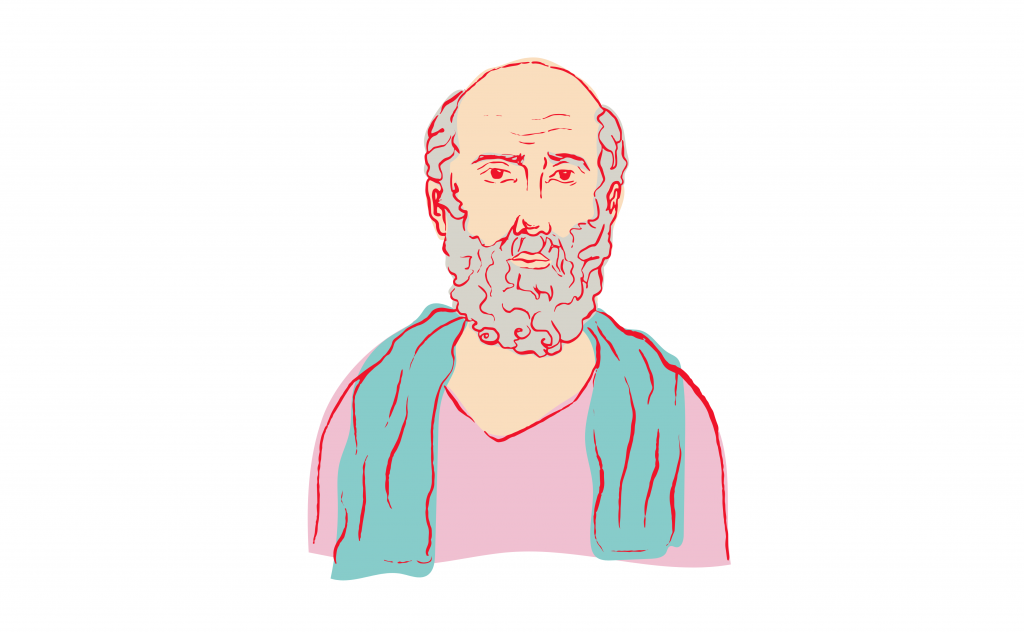
Much of Hippocrates’ teachings were based around the theory of the Four Humours, an idea based on logic and reason, instead of religion like lots of ideas before him.
The Four Humours
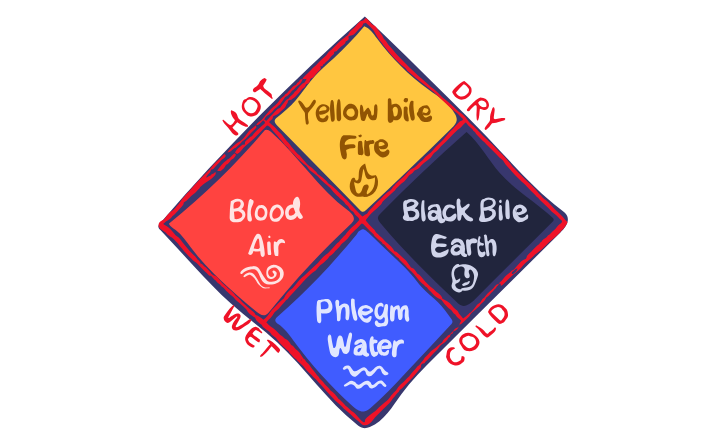
Hippocrates claimed that in order to be healthy, a person’s Humours should be balanced. If imbalanced, this could cause a person to become unwell. This imbalance could be caused by a variety of factors, such as diet and the seasons. The Four Humours diagram shows the symptoms linked with each Humour. For example, an imbalance of blood was associated with hot and wet symptoms like a fever.
Galen
Born in 130 AD, Galen built on the ideas set out by Hippocrates, introducing what he called the Theory of Opposites. Galen believed in the importance of dissection for understanding the body, but was only able to dissect animals. He also believed in the importance of listening to a patient’s pulse, something still used in medical care today.
One of the reasons Galen’s ideas remained so popular in the Medieval period is because they aligned with the teachings of the Catholic Church. Galen believed in the soul, and one God or “creator”, so the Church supported his work. Given the importance of the church in society at the time, this meant doctors didn’t challenge him either.
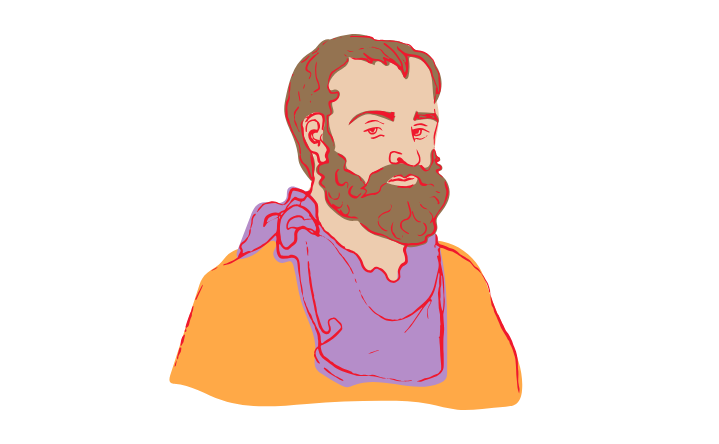
Galen’s work spread far and wide and made it to Europe via Islamic texts that were then translated into Greek in Salerno, Italy. Salerno was somewhere people regularly stopped on the way to the Holy Land, so his ideas spread quickly.
Based on the idea of the Four Humours, Galen set out his Theory of Opposites, which recommended treatments for illnesses with the opposite qualities. For example, hot and dry foods would be recommended to a patient with too much phlegm, as this was considered to be cold and wet.
Miasma
Another Ancient idea that continued to have influence in the medieval period (and beyond) was that illnesses were caused by bad smells in the air, known as miasma. Some believed that bad smells were a result of God poisoning the air in response to their sins.
Arabic Medicine
During the Medieval period, compared to medicine in Western Europe, medicine in Islamic regions was much more advanced. While European medicine was restricted by the beliefs of the Catholic Church, Islamic medicine invited change and discovery.
Avicenna (otherwise known as Ibn Sina)
Doctor and philosopher, Avicenna, was one of the most highly regarded figures in the field of medicine in the Islamic Empire. His most famous texts include the Canon of Medicine and the Book of Healing, and his works were printed widely across the Islamic regions and Europe. The Canon of Medicine was such an influential medical text that it was still used in the eighteenth century.
Rhazes (otherwise known as Al-Razi)
Rhazes was a doctor who, like Galen, believed in using observation to understand health. Rhazes wrote hundreds of books that were used in university teaching all over Europe and was the first person to notice the difference between the symptoms of smallpox and measles. He was also an important figure in the development of Islamic hospitals.
Hospitals
Along with important texts and discoveries, Islamic hospitals were also ahead of Europe. Not only did Islamic hospitals exist to care for the sick, but also educate medical students who could gain practical experience there. Some of the most well-known hospitals included lecture spaces, pharmacies and libraries, and cleanliness and ventilation were important throughout.

Quiz yourself!
Want to share feedback on this content? Get in touch or fill out the form.

